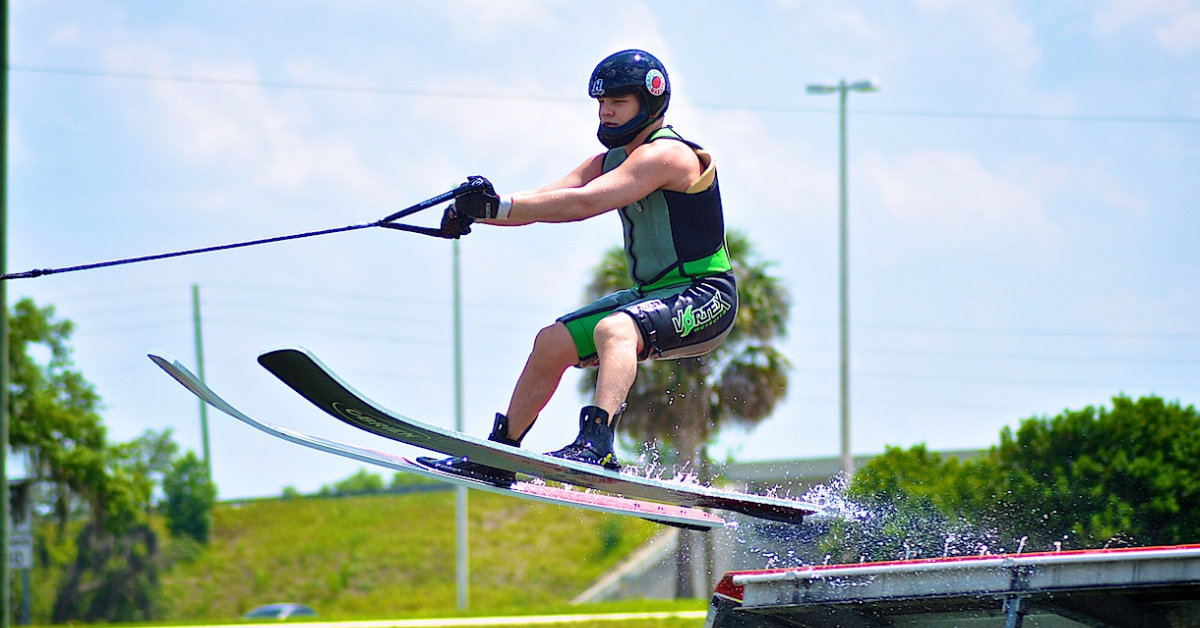
Ryan Riehl has dedicated almost 20 years to adaptive waterski, a sport that became his life.
At nine years old, Riehl lost his eyesight due to a tumor on his optic nerve, which left him mostly blind except for some light sensitivity.
Sport played a major role in his life, so when he started to lose vision, Riehl pivoted and began exploring various blind sports such as goalball and downhill skiing—where he would communicate with a spotter via walkie talkie.
From there, Riehl attended a clinic with Waterski and Wakeboard Saskatchewan, which introduced individuals with disabilities to the sport. And the rest was history.
“My first time was an amazing experience and it’s an experience I will never forget. Feeling the wind in your face, I was hooked and immediately wanted to continue with the sport,” shared Riehl.
His skills developed quickly, and it wasn’t long before he was named to the Canadian Disabled Waterski Team. From there, he represented the country at the 2009 World Disabled Waterski Championships and earned four bronze-medals, a first in Canadian history within the blind category.
But in 2018, life shifted again for Riehl as he lost hearing in both ears.
“I was unsure if I was still able to compete as a water-skier as my balance was now affected due to being both blind and deaf,” said Riehl.
Helping to support Riehl on this new part of his athletic journey was the Deaf and Hard of Hearing Athlete Assistance Grant, one of several grants administered by Sask Sport through the Sask Lotteries Trust Fund, to help reduce barriers and increase access to training and competition opportunities. Utilizing the grant, Riehl was able to continue pursuing his passion.
“The grant helped with coaching being able to spend the extra time with me that I needed. Communication was more lengthy and required a lot of extra explanations,” he said. “Having the money to pay for transportation needs and the supports I needed to continue to be part of the Canadian team would not of been possible without the grant. Training expenses, travel expenses and just anything associated with the sport that I needed, was supported by the grant and I am very thankful for that.”
Unfortunately, Riehl was forced into retirement much sooner than he ever wanted and shortly after he had claimed a silver medal at world championships. He required spinal surgery to repair scaring that was pressing on his spine and a degenerative change.
However, despite having the decision to stop participating in waterski as an athlete, it has not dulled his passion for the sport and he now assists others as a coach and board member.
“Sport is my life. It gives me a reason to get up every morning,” Riehl said. “I wanted to be able to still help people with disabilities get involved in waterskiing and felt I had a lot of waterski knowledge and experiences I could share.”
The upcoming grant application deadline is September 22, 2026. An athlete must submit a completed application to their Provincial Sport Organization or Multi-Sport Organization by the set date. The Provincial Sport Organization or Multi-Sport Organization must review, sign and submit the application to the Sask Lotteries Trust Fund by October 1, 2026.
If you are interested in applying for one of the Deaf and Hard of Hearing Grants, or interested in learning more, including eligibility, check out Sask Sport.